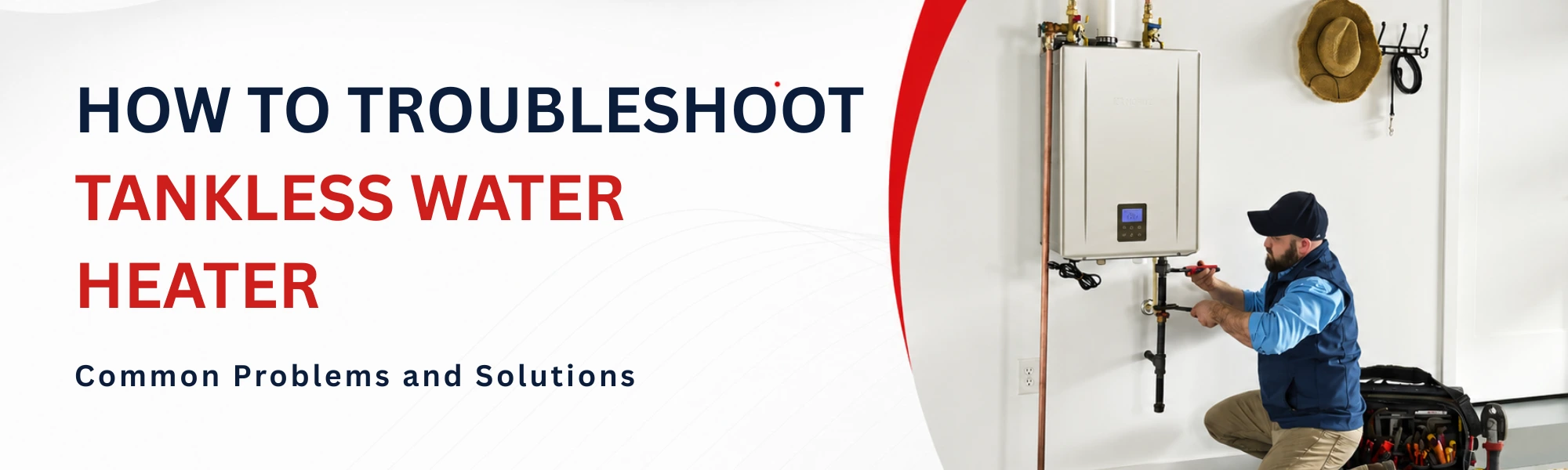
Few household issues are as frustrating as turning on a faucet and discovering there's no hot water. If your tankless water heater is not producing hot water, the problem could be caused by anything from a simple power interruption to a maintenance issue that requires professional attention.
Fortunately, many of the most common causes can be identified through basic troubleshooting. This guide explains why your tankless water heater may not be working and the steps you can take to restore reliable hot water.
1. Check the Gas Supply
For gas-powered tankless water heaters, an interrupted gas supply is one of the most common reasons hot water stops flowing.
Possible Issues:
- Gas shutoff valve is closed
- Utility gas service interruption
- Insufficient gas pressure
- Gas line obstruction
What to Do:
- Verify the gas valve is fully open.
- Check whether other gas appliances are functioning properly.
- Contact your utility provider if you suspect a service interruption.
Without a proper gas supply, the burner cannot ignite and the unit will not heat water.
2. Verify Power to the Unit
Even gas tankless water heaters require electricity to operate their control boards, ignition systems, and safety features.
Check the Following:
- Tripped circuit breaker
- Power outage
- Loose electrical connections
- GFCI outlet issues
What to Do:
- Reset the circuit breaker if necessary.
- Verify that the display panel is illuminated.
- Confirm that the unit is receiving power.
If the unit remains unresponsive, visit the Noritz Support Center for model-specific guidance.
3. Inspect for Ignition Failure
If the system receives gas and power but still does not produce hot water, an ignition issue may be preventing the burner from activating.
Common Causes:
- Dirty ignition components
- Blocked air intake
- Faulty flame sensor
- Venting issues
Signs of Ignition Problems:
- Error codes on the display
- Clicking sounds without burner activation
- Intermittent hot water
Many modern tankless water heaters include built-in diagnostics that can help identify ignition-related issues.
4. Look for Water Flow Restrictions
Tankless water heaters activate only when a minimum flow rate is detected.
Possible Causes:
- Clogged water filters
- Partially closed valves
- Mineral buildup
- Plumbing restrictions
Troubleshooting Steps:
- Clean inlet water filters.
- Verify all service valves are fully open.
- Check faucets and showerheads for restrictions.
Restricted water flow can prevent the unit from activating properly, even if all other components are functioning normally.
5. Scale Buildup in the Heat Exchanger
Over time, hard water minerals can accumulate inside the heat exchanger. This buildup reduces efficiency and can eventually affect hot water production.
Signs of Scale Buildup:
- Reduced hot water output
- Fluctuating temperatures
- Lower water pressure
- Increased energy consumption
Recommended Solution:
Schedule regular descaling and maintenance to remove mineral deposits and maintain peak performance.
For additional maintenance recommendations, read our guide on tankless water heater troubleshooting and preventive care.
6. Check for Error Codes
Most modern tankless systems display diagnostic error codes when a problem is detected.
Common Issues Indicated by Error Codes:
- Ignition failure
- Flame loss
- Venting restrictions
- Water flow abnormalities
- Overheating conditions
Record any displayed code and consult your owner's manual or technical documentation.
The Noritz Support Portal provides access to manuals, troubleshooting resources, and technical support information.
When Should You Call a Professional?
While many troubleshooting steps can be performed safely by homeowners, certain issues require professional diagnosis.
Contact a qualified technician if:
- Error codes continue after resetting the unit
- You suspect a gas supply problem
- The system repeatedly shuts down
- Water leaks are present
- Hot water issues continue despite basic troubleshooting
Use the Noritz Contractor Finder to locate a trained service professional near you.
Could It Be Time for a Replacement?
If your tankless water heater frequently experiences problems, replacement may be a better long-term investment than repeated repairs.
Consider upgrading if:
- Repair costs are increasing
- The unit is approaching the end of its service life
- Efficiency has significantly declined
- You want advanced features and improved diagnostics
The Noritz EZ Series PRO offers simplified installation, enhanced efficiency, built-in diagnostics, and long-term reliability for homeowners seeking an upgraded hot water solution.
Final Thoughts
When a tankless water heater stops producing hot water, the cause is often related to gas supply issues, power interruptions, ignition failures, water flow restrictions, or maintenance-related scale buildup. By following a systematic troubleshooting process, homeowners can often identify the source of the problem and determine whether a simple fix or professional service is needed.
For more troubleshooting tips, maintenance guidance, and product resources, explore the Noritz support and homeowner resource centers.
Frequently Asked Questions
Why is my tankless water heater not producing hot water?
Common causes include gas supply interruptions, power issues, ignition failures, scale buildup, restricted water flow, or system error codes.
Why does my tankless water heater have power but no hot water?
The issue may be related to ignition failure, gas supply problems, blocked venting, or internal safety controls preventing operation.
Can hard water cause a tankless water heater to stop working?
Yes. Mineral scale buildup inside the heat exchanger can reduce efficiency and eventually impact hot water production.
How do I know if my tankless water heater needs maintenance?
Signs include fluctuating temperatures, lower water pressure, inconsistent hot water, increased energy usage, or recurring error codes.
Should I repair or replace my tankless water heater?
Minor issues can often be repaired, but older units with recurring problems may benefit from replacement with a newer high-efficiency model.